
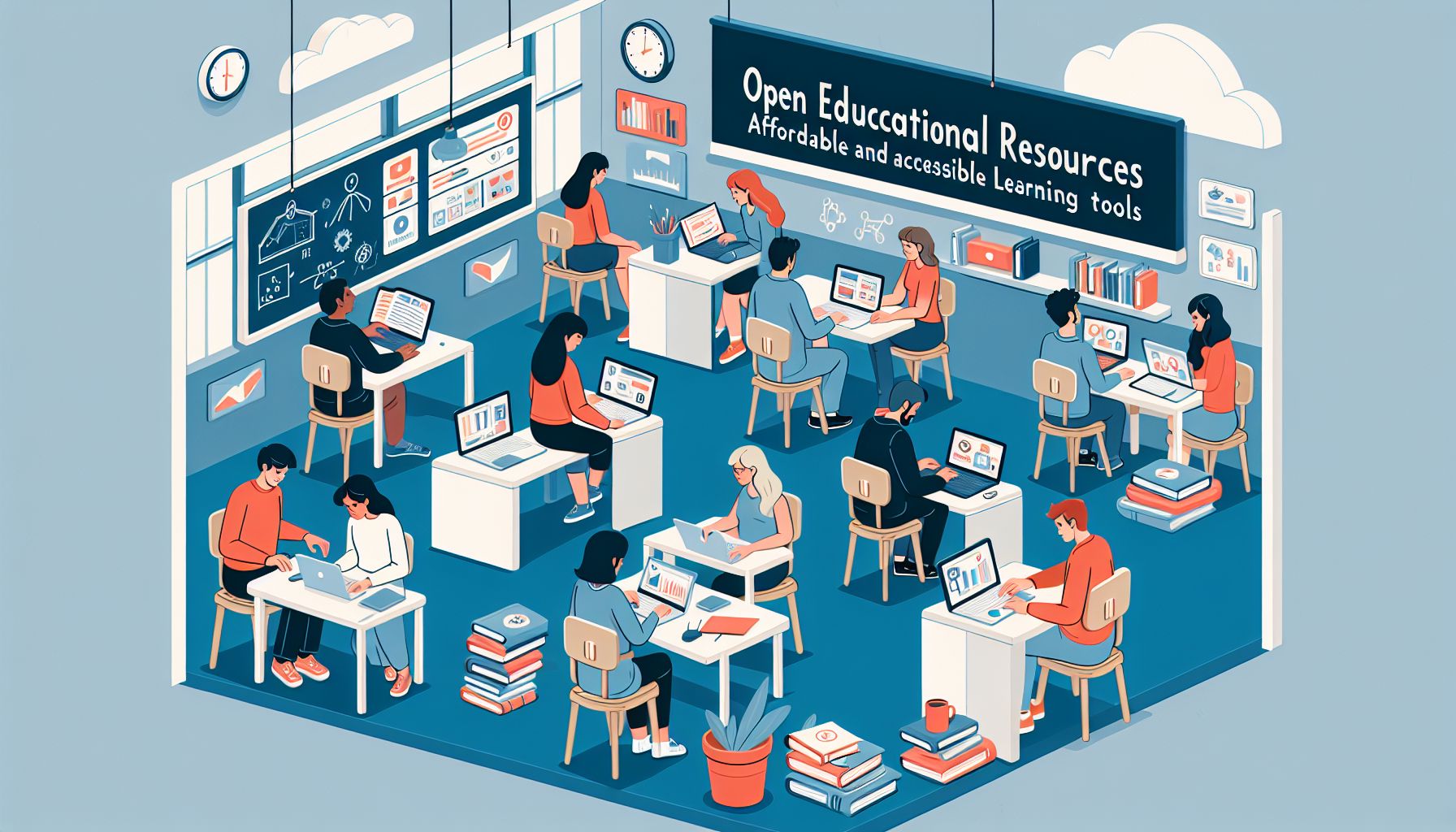
In today’s digital age, the cost of acquiring a college education continues to rise, leaving many university students burdened with soaring tuition fees and the added expense of textbooks and learning materials. However, there is a silver lining amidst this financial storm in the form of Open Educational Resources (OER). These valuable resources offer students an affordable and accessible alternative to traditional learning tools, providing digital materials that are tailored specifically to meet the academic needs of university students.
What are Open Educational Resources?
Open Educational Resources, or OER, refer to any educational materials available for free use, modification, and redistribution. These resources can include textbooks, lecture slides, videos, simulations, quizzes, and more, all of which are openly licensed or in the public domain. OER has gained considerable popularity in recent years due to its potential to reduce costs for students while maximizing learning opportunities.
The Benefits of Open Educational Resources for University Students
Cost-Effectiveness
One of the most significant advantages of OER is the cost-effectiveness it offers to university students. With traditional textbooks and learning materials often costing hundreds of dollars each, the financial burden on students can be overwhelming. OER provides a cost-free alternative, enabling students to access high-quality educational materials without breaking the bank. By eliminating the need to purchase expensive textbooks, OER saves students money while still providing access to the knowledge required to excel academically.
Accessible Learning Materials
Accessibility is another crucial aspect of OER. Unlike physical textbooks that may not always be available in sufficient quantities at university libraries or may need to be shared among numerous students, digital OER materials can be accessed from anywhere at any time. This accessibility is particularly beneficial for university students who may have limited library hours or who are unable to visit the campus due to various circumstances. OER ensures that educational resources are available to all students, regardless of their location or circumstances, promoting equal opportunities for learning.
Tailored to University Students’ Needs
Open Educational Resources are designed to cater specifically to the academic requirements of university students. Instructors and educational experts create and curate OER materials with the goal of maximizing their relevance and effectiveness in higher education. This tailored approach ensures that the content aligns closely with syllabi and course objectives, enabling students to gain a comprehensive understanding of the subject matter. OER materials often undergo rigorous peer review, ensuring their quality and reliability, thus offering students a reputable source of information and learning tools.
Flexibility and Customization
OER allows for greater flexibility and customization in learning. Traditional textbooks follow a predetermined sequence of topics, limiting students in terms of their options for exploration and study. However, OER materials can be easily adapted and customized by instructors to suit the specific needs and pace of their students. Additionally, students themselves can engage with these resources, adjusting their learning experience to match their individual learning styles and preferences. This flexibility allows for a more personalized and engaging educational journey, ultimately leading to better comprehension and academic success.
Where to Find Open Educational Resources
A wide range of platforms and repositories exist to help students access Open Educational Resources. Some popular options include:
-
OpenStax: OpenStax offers free peer-reviewed textbooks that cover various subjects, including math, science, social sciences, and humanities. These textbooks are written and reviewed by educators from universities worldwide, ensuring their quality and relevance.
-
MIT OpenCourseWare: The Massachusetts Institute of Technology provides OpenCourseWare, a platform featuring lectures, notes, and assignments from a vast array of courses. University students can access these materials to supplement their own coursework or explore new topics.
-
OER Commons: OER Commons is a comprehensive platform offering a wide range of educational resources, including textbooks, lectures, and interactive simulations. Through its robust search features, students can easily find OER materials relevant to their specific needs and interests.
-
Merlot: Merlot stands for Multimedia Educational Resource for Learning and Online Teaching. It contains an extensive collection of OER materials, spanning numerous disciplines. Students can search for resources by keyword or browse through curated collections to find the resources they need.
In Conclusion
Open Educational Resources have become an invaluable tool for university students seeking cost-effective and accessible learning materials. With the rising costs of education, OER provides an alternative that saves students money while offering tailored resources that align with their academic needs. The benefits of OER extend beyond cost savings, providing customization, flexibility, and increased accessibility to ensure that all students have equal opportunities to excel in their studies. As the availability and quality of OER continue to expand, university students should take full advantage of these valuable resources to enhance their educational journeys.